Showing posts with label N.T. Wright. Show all posts

Friday, 28 April 2017

Historical Reasons for the Resurrection?


This past Sunday I did something that I had never done before as a Pastor. I preached on the historical reasons for the resurrection. It was not an easy sermon to prepare. There is a lot of material to cover in such a short time. I found myself a bit apprehensive to give a list of reasons why one might believe in the resurrection. (You can listen to that sermon above in the video player) 

You may ask, "Why the apprehension?"

Certainly, that is a valid question. 

Why should any minister of the Gospel be apprehensive on sharing the historical case for the resurrection? I guess my apprehension could be narrowed to the fact that I did not want to build an entire case on reason alone. I think it's dangerous to base our faith on a post-enlightenment rationalism that declares, "I have empirically proven the answer, thus removing the need for faith."

 Jason Micheli captures my apprehension perfectly when he writes,
 "The Barthian in me bristles at the unexamined assumption that that which is ‘objective’ and true must be empirically verifiable, it’s nonetheless true that the same Barthian in me is allergic to rational apologetics."- tamedcynic.org 
And so all of this left me with an uneasy feeling about putting together a sermon that compiled a list of reasons for believing the resurrection. I was apprehensive about a "wooden rationalism" that called for undeniable verification. Thankfully, both Jason & N.T. Wright helped me provide a proper framing of where to put these arguments for the resurrection. 

Jason Micheili cleverly asserts this dialectical statement:
To say the resurrection of Christ is beyond historical verification is true, for we believe God intervenes from beyond history to raise Jesus from beyond the grave. But to say the resurrection of Christ is beyond historical verification is not also to suggest that the resurrection of Christ is beyond historical plausibility, for we believe God intervenes to raise Jesus from the grave within historyIn fact... I do think the resurrection is the best- or at least a compelling- historical explanation for the resurrection of Jesus.

N.T. Wright, in his popular book Surprised By Hope, (and elsewhere) spends endless chapters laying out the historical case for the plausibility of the resurrection. Yet, after tirelessly laying out his through argument, Wright explains to his readers exactly where these rationalistic based arguments belong for followers of Jesus. He writes, 
"[T]hough the historical arguments for Jesus’s bodily resurrection are truly strong, we must never suppose that they will do more than bring people to the questions faced by Thomas, Paul, and Peter, the questions of faith, hope, and love. We cannot use a supposedly objective historical epistemology as the ultimate ground for the truth of Easter. To do so would be like lighting a candle to see whether the sun had risen. What the candles of historical scholarship will do is to show that the room has been disturbed, that it doesn’t look like it did last night, and that would-be normal explanations for this won’t do. Maybe, we think after the historical arguments have done their work, maybe morning has come and the world has woken up. But to investigate whether this is so, we must take the risk and open the curtains to the rising sun. When we do so, we won’t rely on the candles anymore, not because we don’t believe in evidence and argument but because they will have been overtaken by the larger reality from which they borrow, to which they point, and in which they will find a new and larger home. All knowing is a gift from God, historical and scientific knowing no less than that of faith, hope, and love; but the greatest of these is love."- N.T. WrightSurprised By Hope, pg. 74
So this is all to say, that while I find the various reasons for the resurrection compelling, I must always recognize that these reasons alone cannot form the basis of faith and trust in the resurrection. I must go deeper from reason to hope, faith, and love

Tuesday, 8 July 2014

N.T. Wright: "Our Politics Are Too Small"


N.T. Wright in his latest book, Surprised By Scripture, is offering direct commentary on a myriad of issues. I say, 'direct' because anyone who is familiar with Wright's style will know that he has a tendency towards the grandiose epic themes of Scripture. Wright, in this latest offering, has narrowed down to a singular concentrated topic. The book is laid out not as a single exposition but as a collection of essays that are meant to stand on their own. Surprised By Scripture is largely the result of Tom being asked to lecture on specific issues and topics, thus forcing an engagement and reflection into a presentable material. The result of years of speaking engagements has produced this book. 

Surprised By Scripture is not a collection of position papers. Wright remarks in the preface that he has published these collections of essays, "not as dogmatic pronouncements but as explorations into vast and exciting topics." I think that is an important preface to our engagement with the following  chapter, "Our Politics Are Too Small".


"Our Politics Are Too Small" 

Wright opens this chapter by musing that in the 1980s he never would have suspected that he would be so interested about "the question of God in public."[1] It was the work that Tom was doing on Jesus in the historical context that forced him to mature his thoughts on politics and God. This growth and maturity eventually led to Wright voicing his objections to political policies and practices. Tom writes,
"I have been used to getting plaintive emails saying, 'We like what you write about Jesus and the resurrection; we are fascinated what you say on Paul; but why are you so critical of our President?' And my answer is, " If you actually read what I say about Jesus and the Kingdom, and you understand what Paul was really about, you'll have to take the questions of God in public seriously in a whole new way. To say that I was confusing spiritual issues with political issues is simply to restate the old Enlightenment dichotomy at a moment when it is disastrously inappropriate as well as misleading." [2]

It is at this point that I want to highlight a major point that N.T. Wright is making. We have a tendency vis-à-vis the Post-Modern//Post-Enlightenment to dichotomize spirituality and politics. We incorrectly believe that spirituality is for the afterlife, whereas politics are a separate realm for this life. This assumption, according to Wright, is inherently Epicurean. Epicureanism, which stems from the third century BC Greek philosopher Epicurus, who declared that the gods, if they existed at all, were totally removed from the world and never intervened in its affairs. This is not the vision of Scripture. God is concerned about the state of this world. God is concerned about the treatment of the widow and the orphan. "[Jesus'] agenda of dealing with sin and its effects and consequences was never about rescuing individual souls from the world but about saving humans so that they could become part of his project of saving the world."[3, emphasis original]

Wright believes we can find a way forward through a fresh reading of Scripture, namely the four Gospels. The "fresh reading" will start by taking seriously the teaching of Jesus. He comments, "I have been increasingly concerned that much of evangelical Christianity on both sides of the Atlantic has based itself on the Epistles rather than the Gospels, though often misunderstanding the Epistles themselves."[4] The Western church has not wrestled seriously enough with the radical implications of the Gospels. "The four Gospels will not be able to say what they want to say but [because of Western lens] will be patronized, muzzled, dismembered, and eventually eliminated altogether as a force to be reckoned with."[5] 


So how do we read the Gospels afresh? 

1. We need to read the Gospels as an integrated whole. 


  • "Attention has been divided, focusing either on Jesus's announcement of the Kingdom and the powerful deeds- healings, feastings, and so on- through which it is insinuated or on his death and resurrection. The Gospels have thus been seen as a social project with an unfortunate, accidental, and meaningless conclusion, or as passion narratives with extended introductions." [6] 

2. The Gospels as wholes demand to be read in deep and radical integration with the Old Testament. 


  • "We do the Gospels no service by screening out the fact that each in its own way (as opposed to the Gospel of Thomas and the rest) affirms the God-givenness and God-directedness of the Jewish narrative of creation, fall, Abraham, Moses, David, and so on, seen as the narrative of the creator God's rescue of creation from its otherwise inevitable fate. The Gospels claim that it was this project that was brought to successful completion in and through Jesus."[7]

3. The Gospels demonstrate close integration with the genuine early Christian hope.


  • "This is precisely not the hope for heaven in the sense of a blissful disembodied life after death in which creation is abandoned to its fate, but rather the hope, expressed in Ephesians 1, Romans 8, and Revelation 21, for the renewal and final coming together of heaven and earth, the final consummation precisely of God's project to be present, as Saviour, in an ultimate public world. And the point of the Gospels is that with the public career of Jesus and his death and resurrection, this whole project was decisively inaugurated, never to be abandoned." [8]

It is with these three integrations that Wright invites us to see the political nature of the four Gospel's; albeit a political meaning that is deeply integrated with the theological. It would appear that much of Christian theology has wrongly concluded that we must derive our ethical guidance for life in the real world from other sources: common sense, calculation of what will work in a fallen world, non-Christian philosophical sources. N.T.Wright is pushing us to ask an essential question: Should we not begin with an assumption that God’s revelation in Jesus’ life and teaching might well offer clear guidance for our social ethics? Should we not consider the Gospels as the launching of a whole new world?  According to Wright, we can no longer justifiably bi-partisan our approach to politics and theology. "This means would-be theological interpretations that ignore the political dimension, as well as would-be political interpretations that ignore the theological dimension, are simply ruled out as naive and anachronistic."[9]


Wisdom for the Rulers- and the Church

Having now established a framework for thinking about theology and politics, Wright now begins to reflect on the nature of the church and secular rulers. Does the Lordship of Jesus negate our following of state rulers? Is the church meant to practice a separatist monasticism? N.T. Wright comments in this brilliant lengthy section:

"It is noteworthy that the early church, aware of the prevailing tyrannies both Jewish and Pagan, and insisting on exalting Jesus as Lord over all, did not reject the God-given rule even of pagans. This is a horrible disappointment to post-Enlightenment liberals, who would have much preferred the early Christians to have embraced a some kind of holy anarchy with no place for rulers at all. But it is part of creational view of the world that God wants the world to be ordered, not chaotic, and that human power structures are the God-given means by which that end is to be accomplished- otherwise those with muscle and money will always win, and the poor and the widows will be trampled on afresh. This is the point at which Colossians 1 makes its decisive contribution over and against dualisms which imagine that earthly rulers are a priori a bad thing (the same dualisms, as I have been suggesting, that have dominated both the method and the content of much biblical scholarship). This is the point at which the notion of the common good, advanced afresh by the Roman Catholic bishops in the 1990s and now reemphasized (though I think without full clarity) by Jim Wallis, has its contribution to make.
The New Testament does not encourage the idea of a complete disjunction between the political good to be pursued by the church and the political good to be pursued by the world outside the church, precisely for the reason that the church is to be seen as the body through which God addresses and reclaims the world. Here, I think, the essentially anabaptist vision of Wallis and others may need to be nuanced with a more firmly creational theology. (I know there are many varieties of anabaptism, and I hope it's clear that I am in considerable sympathy with many of their emphases, but there comes a point when anabaptism holds back from the dangerous task of working with the world, which I believe is just as Christian an obligation as working against the world.) "[10, Emphasis mine]
I was challenged by the above quoted section in two ways: (1)My own tendency to apathy around political involvement (2)My self identified Anabaptism. It can be very tempting as an Anabaptist (I speak personally) to lapse into an against the world mentality. I think of the history of separatism, displayed through various Anabaptist sects, as a prime example of my own tradition's inclination to be against the world. I believe N.T. Wright's challenge to the Anabaptist community is one we must examine. How are we simultaneously working against and with the world? Failure to live in the tension of this question validates Wright assertion that, "We in the contemporary Western world have all but lost the ability, conceptually as well as practically, to affirm simultaneously that rulers are corrupt and must be confronted and that they are God-given and must be obeyed." [11] 

Thankfully for my own sanity, Wright clarifies what he means by obedience to the powers. Tom draws on Colossians 1:18-20 to emphasize that Scripture teaches that the rulers will be reconciled. The rulers of the age, while ultimately failing to bring new creation, (only Christ can do that) can still be used by God to bring order to the world. This, according to Wright, is the point of Romans 13. "Not as the validation of every program that every ruler dreams up... but as the strictly limited proposal, in line wither Isaiah's recognition of Cyrus, that the creator God even uses those rulers who do not know him personally to bring fresh order and even rescue to the world."[12] 


Wright is not advocating for a blind allegiance to the rulers and governments. Tom's insistence on God's calling of rulers is yoked to a deep conviction of the prophetic role of the church. He writes, "God working through earthly rulers only makes sense if the church embraces the vocation to remind the rulers of their task, to speak truth to power, and to call authorities to account."[13] "You can have as high a theology of the God given calling of rulers as you like, as long as your theology of the church's witness and martyrdom matches it stride for stride."[14] 


Concluding Thoughts

I am deeply aware that N.T. Wright has maintained the tension in this essay. I find myself being a bit uncomfortable at the lack of an easy resolution and simple answers. That, as I mentioned in the intro to this blog, was Tom's goal in this essay, to approach the issues "as explorations into vast and exciting topics." I think he accomplished his goal. Here are some questions I am wrestling with as a result of this essay:
  • How does the church collaborate with governments without the compromise of our prophetic voice?
  • How can we simultaneously work against and with the rulers? 
  • Is corrupt order and leadership better than chaos? 
  • Might our lack of cross-bearing witnessing weaken the church's prophetic witness? Are we willing to suffer for our witness? 
  • Why have we tended to ignore the political implications of the Gospels? What steps could I take towards integration?
  • How can participating in the flourishing of one specific nation be representative of the transnational Kingdom of God? Should Christians not work for the good of all, regardless of nationalism?


Thanks for reading.... Some of the questions I have asked are engaged in the following chapter(s) of the book. Notably the following passage from the essay, "How to engage tomorrows world":

"Jesus's way of life is the path of self-giving love, that mission and service can never be about imposing a would-be Christian policy or ethic on an unwilling or unready public, but rather allowing Jesus's way of bringing his kingdom to work through us and in us. The Church at its best has always sought to transform society from within."[15]


 Works Cited
1. Wright, N.T., Surprised By Scripture, New York: Harper Collins,  p. 163
2. p. 166
3. p. 170
4. p. 167
5. p. 168
6. p. 169
7. p. 172
8. p. 172
9. p. 174
10. p. 175-176
11. p. 176
12. p. 177
13. p. 178
14. ibid.
15. p. 183

Wednesday, 19 February 2014

Who are the meek?


This past weekend I taught on the third of the Beatitudes, which are located at the beginning of the Sermon on the Mount in Matthew's Gospel. "Blessed are the meek, for they will inherit the earth." (You can listen to the sermon here.) I knew going into this week of study that I would have to spend considerable time explaining what exactly "meek" meant to my congregation. I was not comforted when I cracked open one of my commentaries and read the following words:


“Meekness- is one of the most misunderstood words in the English language.”Life in the Spirit New Testament Commentary
, pg. 151


'Meek' is not really a word that we use in conversation today. I can't think of the last time my wife said to me, "I noticed you were acting meek tonight!" Likewise, I've never heard of someone causally saying, " Boy, did he act rather meek tonight." As far as I know, no one brings up 'meek-ness' on the list characteristics they hope to find in a spouse. It really is a word shrouded in obscurity and vagueness. Perhaps, the lack of clarity and popularity of the word is itself a clue to the meaning of 'meek'? 

I remember in Sunday School being taught as a child,"meekness is not weakness", but I don't recall being taught anything to what meek actually meant. I hope to solve that problem with this blog. 

Here is a 'sketch' from my study notes:


‘MEEK’- πραΰς (prä-ü’s)
gentle, kind, humble, benevolent, humane

(Matt 5.5, 11:29, 21.5; 1 Peter 3.4; Gal 5.23)

Meek (NIV, ESV, KJV)

The mild, patient, long-suffering (AMP)

Humble (CEB, CEV, ERV, GNT, NLT)

Gentle (NASB) 

Content with who you are (The Message) 

Greek Context:

Aristotle (384- 322 BCE) 


Meekness is not about powers forgone but powers controlled and exercised with discernment.”
- Aristotle


Xenophon (430- 354 BCE)


A wild stallion that has been tamed is meek-Xenophon (430-354 BCE)


Hebrew Context: 

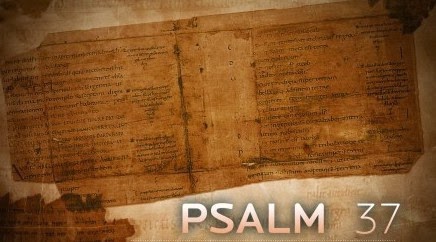
"The promise stands out: “for they will inherit the earth [Land].” Clearly the promise evokes both the land promise in Genesis 12 and the promises to the oppressed and waiting in Psalm 37:11 (“the meek will inherit the land and enjoy peace and prosperity”); 37:22 (“those the LORD blesses will inherit the land”); and 37:34 (“he will exalt you to inherit the land”). The Qumran community prized Psalm 37.33 While it has been customary for Christians to see in the NIV’s word “earth” a synonym for “world” now or in the new heavens and earth, there is little likelihood that Jesus would have “world” in mind. We must wrap our minds around the Bible’s Story for the first-century Jew: those to whom Jesus spoke didn’t care two figs for owning Italy or Gaul. They simply wanted shalom in the Land of Israel." -Dr. Scot McKnight, Sermon on the Mount Commentary


1Do not fret because of those who are evil
    or be envious of those who do wrong;

2 for like the grass they will soon wither,
    like green plants they will soon die away.

3 Trust in the Lord and do good;
    dwell in the land and enjoy safe pasture.

4 Take delight in the Lord,
    and he will give you the desires of your heart.

5 Commit your way to the Lord;
    trust in him and he will do this:

6 He will make your righteous reward shine like the dawn,
    your vindication like the noonday sun.

7 Be still before the Lord
    and wait patiently for him;
do not fret when people succeed in their ways,
    when they carry out their wicked schemes.

8 Refrain from anger and turn from wrath;
    do not fret—it leads only to evil.

9 For those who are evil will be destroyed,
    but those who hope in the Lord will inherit the land.

10 A little while, and the wicked will be no more;
    though you look for them, they will not be found.


11 But the meek will inherit the land
    And will delight themselves in the abundance of peace.
The 'Meek person' of Psalm 37:1-11: 

  • “Trusts in the Lord” (v3) 
  • “Takes delight in the Lord” (v4)
  • “Commit their ways to the Lord” (v5) 
  • “Patiently trusts God alone for vindication” (v6-7, 9-10)
  • “Refrains from anger & wrath” (v8) 
  • "Inherit the land" (v9, 11) 
  • “Delights themselves in peace” (v11) 


I also spent the last week asking Christian scholars, leaders, bloggers and authors to 'tweet' me their definition of meek. Here is what they have to say about "meek-ness": 


Biblical meekness isn’t letting yourself be a doormat.  It is about loving someone so much that you completely forget yourself in the process."- Robert Martin of Abnormal Anabaptist


Michael Hardin


Meekness: a gentle non-coercive approach to relationships. - Michael Hardin of preachingpeace.org 


Dr. Scot McKnight

The “meek” are those who suffer and who have been humbled, and yet they do not seek revenge. They lovingly trust God and hope in God’s timing and God’s justice.” 
- Dr. Scot McKnight, Sermon on the Mount Commentary 


Dr. Brad Jersak
Meekness (synonym - gentleness) is 'strength under control for the purpose of goodness.'


- Dr. Brad Jersak, Westminster Theological Centre


Dr. N.T. Wright 

The word ‘meek’ is always a challenge. The usual answer is ‘like wild horse tamed’ – i.e. with all the energy and fire of the wild horse but now under wise control. This is to stop the word simply sounding ‘weak’ or wimpish.
  I suppose the word goes with others like ‘gentle’ (though that is more directly related to how someone behaves in relation to others) and ‘humble’ (though that is more to do with one’s belief about oneself). It is, as it were, half way between these two: it denotes a particular character but also the way that character behaves to others.
In its famous location in the Beatitudes, at the start of the Sermon on the Mount, it is one of the characteristics Jesus highlights not just for its own sake but one of the types of personality through whom God is starting to bring wise and healing order to his world. Here you could define it in terms of its opposites: the idea that the meek will inherit the earth is astonishing to most people in most cultures, who expect that it will be the pushy, the arrogant, the bossy, the power-brokers, the bullies who will grab the earth and inherit it for themselves. No, says Jesus; in God’s world things work the other way up. The word ‘meek’ stands at the heart of that claim. (I don’t do tweets, by the way… sorry!)

Thanks for reading...

Wednesday, 18 September 2013

Encountering the Holy Spirit in John 14-16


I had the great opportunity to be invited to speak at the 'Encountering the Holy Spirit' event here in Morpeth, England. The event is an ecumenical effort hosted by all the churches here in Morpeth. We gathered to worship, pray, listen and seek God. What really impressed me was the diversity of denominations represented at the event. We had Anglicans, Catholics, Pentecostals, Anabaptists, Methodists, etc... represented at the gathering. It was very encouraging to see the greater body gather in this way! 

I thought I would share the audio of the session (click here) and share my notes I made during my study time. (read below)  

The context of John 14-16

John 14-16 is a part of the “Farewell Discourses” which are found between 13.31 to 17.26. John is drawing upon a well established Jewish literary tradition. Jewish testaments imagine the dying (or departing) person surrounded by his most intimate friends and family.There is an exhortation to obey the law, to carry on, predictions of what is to come, and typically conclude with a prayer for those left behind. In some cases, the departing person passes his “spirit” to his followers or successor. The best examples of a Farewell Discourse are Moses to Joshua and Elijah to Elisha. (Deuteronomy 31–34; 2 Kings 2:9–14) 

The focus of the Farewell Discourse is always for the concern for the comfort and encouragement of those left behind. It is no surprise then that we observe the following over the next few chapters:

  • “Do not let your hearts be troubled”(14.1) 
  • Jesus speaks directly of his upcoming death, resurrection and accession.  “Where I am going you cannot follow” (13:33) 
  • Jesus is preparing his disciples for what is yet to come. “I’ve said these things to you,” Jesus went on, “ to stop you from being tripped up”. 16.1  
  • Jesus promises the Holy Spirit  (the Comforter)“And I will ask the Father, and he will give you another helper, to be with you forever.” 14.16


"In the farewell of Jesus many of the traditional elements appear. He encourages his disciples and comforts them (John 14:1). He also urges them to be obedient (13:34; 15:12). Moreover, Jesus promises that his Spirit will indwell and empower his followers following his death (14:17, 26; 15:26; 16:3, 13). In other words, we have in John 13–17 all of the elements of a Jewish farewell."

 - John, NIV Application Commentary


“These chapters have often rightly been seen as among the most precious and intimate in the New Testament. They are full of comfort, challenge and hope, full of the deep and strange personal relationship that Jesus longs to have with each of his followers. We shouldn’t be surprised that they are also full of some of the richest theological insights, of a sense of discovering who the true God is, and what he’s doing in the world and in us.”  - John For Everybody, N.T. Wright 


So what does Jesus teach us about the Holy Spirit in John chapters 14-16? 

The Holy Spirit empowers us to do the work of Jesus. (Jn 14:12, Acts 1:8)

  • “I’m telling you the solemn truth, ‘Anyone who trusts in me will also do the works that I’m doing. In fact, they will do greater works than these, because I’m going to the father!” John 14.12
      • Immediately after promising the greater works, Jesus begins to talk about the Holy Spirit. 
      • If it is true that the power of God is resident in Jesus and that the disciple is invited to know Jesus and gain life from him, then in some manner the disciple will share in God’s power. It is of utmost importance to note that the astonishing promise of 14:12 points to the future. Jesus must first go to the Father before the promise of remarkable works and realized prayer can come.
  • “But you will receive power when the Holy Spirit comes on you and will be my witnesses in Jerusalem, and in all Judea, and Samaria, and to the ends of the earth.” -Acts 1:8 


The Holy Spirit is our Paraclete ( παράκλητος)  

“And I will ask the Father, and he will give you another paraclete ”(14.16a)

  • The word used here in the Greek is ( παράκλητος)
  • This word occurs 5 times in the New Testament, all in the writings of John. (14:16, 26; 15:26; 16:7) 
      • A fifth (and final) use occurs in 1 John 2:1, where Jesus is called a paraclete.
  • It can be translated as Comforter, Encourager, the Helper, the Advocate, the Intercessor. 
  • Occurs in secular Greek literature for an advocate in a court of law, who comes “alongside” a person to speak in his or her defence and provide counsel.


Jesus calls the Spirit another helper.

  • Up until this point Jesus has been walking with the disciples, teaching them, sending them out to heal the sick, bind up the broken hearted.
  • Jesus is thus a Paraclete, who is now sending a second Paraclete: The Holy Spirit. 
      • 1 John 2:1, Jesus is called a paraclete.
  • This means that the ongoing work of the Spirit will be a continuation of the work of Jesus during the disciples’ lifetime.

The Holy Spirit is with us forever.

“to be with you forever” (14.16b)

“I will not leave you as orphans; I will come to you.” 14.18

Jesus does not abandon his disciples to their own devices. They are not like sheep without a shepherd, but rather the Good Shepherd calls out to his sheep, and his sheep hear his voice. The promise is that God's very breath, his Spirit, will dwell in us and with us forever. God is not far from anyone. God is with us.

Holy Spirit is the Spirit of Truth 
“This other helper is the Spirit of Truth” 14.17

  • We know that in context Jesus has already said that he is “the truth” (14:6)
  • Jesus is also teaching us that the Holy Spirit is Spirit of truth BECAUSE he testifies of the truth (Jesus). (16:13)
  • Holy Spirit communicates the truth about God, which is the essence of God’s work in Christ 

Holy Spirit dwells in us - John 14:17 (Rom. 8:9; 1 Cor. 3:16; 2 Tim. 1:14;) 
“The world can’t receive him, because it doesn’t see him or know him. But you know him, because he lives in you and will be in you” 14.17


Jesus is describing a pattern of divine life, of indwelling and mysticism, in which God and Jesus share an interiority that leads to this sharing of glory; he also anticipates that disciples will enjoy a similar unity with God (17:24; cf. 14:23) and each other (17:11, 22). Jesus here envisages a profound spiritual intimacy that changes human life. It is a unity encompassing the Father with the Son, the disciples with them both, and the disciples in union with one another.


Holy Spirit teaches us
(1)He brings things to our remembrance.

  • “But the helper, the Holy Spirit , the one the Father will send in my name, he will teach you everything. He will bring back to your mind everything I’ve said to you.” (John 14:26)

(2) The Holy Spirit speaks directly to us.

  • “I have many more things to say to you, more than you can now bear. But when he, the Spirit of Truth comes he will guide you into all the truth. He will not speak on his own; he will speak only what he hears, and will tell what is yet to come. ” - John 16:12-14

Example of the Holy Spirit teaching the church:


(See Acts 10-11)
Peter was forcefully directed by the Holy Spirit to move into new theological territory that must have seemed completely uncertain. This is what Jesus describes in John 16:12–14. The Holy Spirit will be “the Spirit of truth,” guiding his followers into all truth, which they could not then bear to hear but which Jesus no doubt wanted to tell them later.

Here is the heart of the question: Does the Spirit simply lead each generation to apply the truths of Jesus in new ways? Certainly this is true. But does the Spirit also lead into new territory, new doctrines, and new activities unknown in Jesus’ historical ministry? In the present example, one could argue that Peter’s mention of clean and unclean in Acts 10:14 may echo Matthew 15:11 (Mark 7:19; cf. Rom. 14:14), where Jesus redefines “unclean” with new parameters. The Spirit has simply pressed the apostles to apply this truth in an unexpected way.


The Holy Spirit glorifies and testifies of Christ (John 15:26; 16:14).

  • “When the helper comes - the one I shall send you from the Father, the spirit of truth who comes from the Father- he will give evidence about me.”(15:26) 
  • “He will glorify me, because he will take what belongs to me and announce it to you” (16:14)
  • Holy Spirit does not teach us something additional to Christ, but rather testifies of Christ.
  • In theological jargon, our pneumatology (doctrine of the Spirit) must have a Christo-logical basis. To experience the Spirit is to experience Jesus.


The Holy Spirit convicts the world of sin, justice, and judgment.

“When he comes, he will prove the world to be in the wrong about sin, justice (righteousness) and judgment.” (John 16.8) 


"One important issue involves the Greek verb elencho, translated “prove wrong about” in the first edition of the NIV: “[The Spirit] will prove the world wrong about sin. . . . ” Here the idea is that of convincing the world about the truth of its wrongdoing. Brown thinks this contradicts 14:17, since there the world cannot accept the Spirit-Paraclete. But this is a different matter: In 14:17 Jesus is talking about receiving the Spirit, not hearing its message." - John, NIV Application Commentary


"The Spirit will prove that the world is in the wrong, on the three counts that really matter.First, the Spirit will demonstrate that the world is wrong in relation to sin. In other words, the world is guilty of sin; and the evidence is that 'the world', as we have seen throughout this book, has not believed in Jesus . This can only be, Jesus insists, because it is bent on its own way rather than God's way. 

Second, the Spirit will demonstrate that the world is wrong in relation to justice. The world thinks it has justice on its side. But the vindication of Jesus himself- which consists of his 'going away' and being exalted to the Father- is the sign, as in Daniel 7, that the living God has already give sentence on his behalf. If it's justice you want, we already know the verdict:  God had decided in favour of Jesus as the righteous one. All those who follow Jesus share that verdict. (This is where John comes very close to what Paul means by 'justification by faith'.) 

Third, the Spirit will demonstrate that the world is wrong in relation to judgement, which here means 'condemnation'. The world supposes that is can and should pass judgement on Jesus' followers. But the events which are about to unfold, the events of Jesus' death and resurrection, indicate decisively that they are wrong. These events mean that 'the ruler of this world'- the dark power that has kept humans and the world enslaved- has been condemned. His power has been broken. Death itself, the weapon of tyrants and particularity of 'the satan', is a beaten foe. " -John For Everybody, N.T. Wright 

Jesus is convinced that it is ‘better for us’ if he goes away.


“Very truly I tell you, it is for your good I am going away. Unless I go away the Advocate will not come to you, but if I go away I will send him to you.” - John 16.7 

"'If only we'd been there when Jesus was around!' people
often say. 'It would have been much easier. He would have explained everything to us, and told us what to do. And he'd have been such an encouragement. Whatever we are doing, he'd be positive about it, and we'd want to go on and do even better.' It's a common perception but it's wrong on two counts. 

First, the evidence of the four gospels suggest that the people who were around in Jesus' day didn't see it life that themselves. Some of his closest friends betrayed and denied him. Even the beloved disciple ran away in the garden. Most people couldn't really make him out. He was compelling but puzzling. Many thought he was mad. 

Second, in this passage and several others in the next two chapters, we find that Jesus has promised to be 'around' with his people from that day to this. In fact, he's promised that it will be easier, not harder, in this new mode. His people will be able to do things they couldn't do when he was physically present. 

But how will be 'around', now? He has promised to send us his own Spirit, his own breath, his own inner life. " -John For Everybody, N.T. Wright

Questions for reflection:

1. Have you ever experienced the comfort, strengthening, empowerment of God in your life? 

2.Why is Jesus so convinced that it is 'better for us' that he goes away? 

3. Why do we have tendency to down play the role of the Holy Spirit? (e.g. The creeds have only one line for the Holy Spirit) 


Friday, 28 June 2013

Loving Your Enemy: Part 8: But what about?: Biblical Objections

An artist's depiction of Jesus 'going the extra mile'.

I have intentionally waited until the last half of the blog-series to deal with objections to Peace-Theology. The biggest reason for the delay is that I am trying my best to show how I have formed my position from the text and not from a positional stance. By this point in the series, we have covered the historical, and the biblical case for nonviolence. We have presented the case for peace theology in both Testaments. But we are not done yet (not even close). To give this 'peace-theology' a good shake, we need to response to the objections to peace-theology. This blog will just focus on the biblical objections that are raised against peace-theology.

BUT.... what about? (Examining the Biblical Objections) 


But what about the violence of the Old Testament?


We have covered this objection at length in Part 3.  Be sure to check out this blog post.


But what about the violent Jesus of Revelation? Revelation 19:11-21


One popular Calvinist Pastor sums up the appeal to Revelation 19 like this:


"Some emergent types want to recast Jesus as a limp-wrist hippie in a dress with a lot of product in his hair, who drank decaf and made pithy Zen statements about life while shopping for the perfect pair of shoes. In Revelation, Jesus is a prize fighter with a tattoo down His leg, a sword in His hand and the commitment to make someone bleed. That is a guy I can worship. I cannot worship the hippie, diaper, halo Christ because I cannot worship a guy I can beat up." 
Do you notice how this Pastor says that Jesus has a sword in his hand? Do you think our need to have a retributive God might effect the way we read a passage? Don't Christians worship the guy that got 'beat up'? (crucified) Why is it so hard to see the Cross (and resurrection) as the victory of God? 

In the climactic battle scene in Revelation 19 Jesus appears as the conquering rider on a white horse. It is significant that "The Sword" Jesus uses isn’t held in his hand, as the conquering Caesars might be portrayed. It rather comes out of his mouth signifying that Jesus defeats enemies simply by speaking the truth. The 'warrior Jesus' is clothed with a blood soaked robe before the battle even begins (vs 13). The blood is clearly not that of his enemies, whom he has yet to fight. Rather, the symbolism suggests Jesus goes to battle and ultimately reigns victorious by shedding his own blood.

"The fact that the sword Jesus bears in Revelation comes from his mouth indicates that John of Patmos is referring to 
the spoken word of God. It was sheer divine will that ended primordial chaos and created the cosmos through God’s spoken word at the beginning of time (Genesis 1). Now the sheer will of God, through Jesus the Word, will end the darkness of malevolent empire and bring in the new heaven and new earth."[1]

I could understand if you are still not convinced.You might say, "Paul, but what about God's "fierceness and wrath" and the "smiting of the nations". Let's examine a bit further by opening up the great context of the next few chapters of Revelation.


"If “nations” (ethne) get struck down the by rider on the white horse (19:15), we might understand this as the end of corrupt regional governing systems or the end of nationalism. It is, after all, nations (ethne) that have been deceived by the sorcery of Babylon (18:23). Whatever it means for Christ to strike the nations, it does not signal wholesale slaughter. The blood on Christ’s garment (19:13) is not that of enemies; it is his own, shed at Calvary to redeem the world. Paradox imbedded in this imagery suggests something other than simple retribution: the nations (ethne) that get “struck down” will someday walk by the light of the new Jerusalem (21:24)!!!  The agent of this restoration is the Lamb, whose redemptive power makes him worthy of praise. Christ bears the new title “King of kings and Lord of lords” (19:16). Allegiance to Jesus displaces (“strikes down”) allegiance to every other political entity that would be king or lord in our lives.

To understand how God destroys evil, we must rely on the governing imagery that John of Patmos uses for Jesus—and that is the image of Jesus as the Lamb. John seems keenly aware of the paradoxical nature of the Lamb’s power. We see this when John is before the throne of God, weeping because no one is worthy to open the scroll (which apparently contains God’s plan for or foreknowledge of the trajectory of history). John is told not to weep, because “the Lion of the Tribe of Judah” has conquered. But when John looks up, he sees not a ferocious predator but a Lamb standing as if it had been slaughtered (5:6). This verse more than any other is the hermeneutical key to understanding violence in Revelation: amidst the chaos and war and destruction of our world, God has chosen to intervene in the form of a vulnerable Lamb. 


The word “Lamb” appears twenty-seven times, in twelve of the twenty-two chapters of Revelation. Jesus the Lamb is the “shepherd” of God’s people (7:17), and the saints follow him wherever he goes (14:4). Christians hold citizenship in the new Jerusalem, where the Lamb is the “lamp” guiding them (21:23). If readers of Revelation still wonder whether they ever should take up weapons, even in the face of lethal persecution, John inserts this aside: “If you are to be taken captive, into captivity you go; if you kill with the sword, with the sword you must be killed. Here is a call for the endurance and faith of the saints” (13:10)." [2]


If we interpret Revelation according to its genre and in its original historical context, and if we pay close attention to the ingenious way John uses traditional symbolism, it becomes clear that John is taking traditional Apocalyptic violent imagery and turning it on its head.  Yes, there is an aggressive war, and yes there is bloodshed. But it's a war in which the Lamb and his followers are victorious because they fight the devil and Babylon (representing all  governmental systems) by faithfully laying down their lives for the sake of truth (”the blood of the lamb and the word of their testimony”). 


Not convinced?  I don't blame you. 'The Revelation' is notoriously ambiguous and fraught with difficult passages. I have even heard it joked that if you have three pastors in a room, they will have four different interpretations of Revelation! But all this discussion is besides the point, in my opinion. If, hypothetically, Jesus does come back with a literal sword (which I doubt); there is still no indication within the text that humanity will do any fighting. Nope. We will trust in Jesus as the deliverer. 


The question that should haunt us in the appeal to Revelation 19: 


Why should a veiled appeal to an eschatological event from apocalyptic literature get you out of following Jesus' direct and plain teaching on enemy love?  


 But what about Jesus saying he came to bring a sword?(Matthew 10:32-39) 

“Do not suppose that I have come to bring peace to the earth. I did not come to bring peace, but a sword."  (v34 is often thrown out to prove that Jesus' didn't really teach nonviolence)

Here's the rest of the passage:


"For I have come to turn ‘a man against his father, a daughter against her mother, a daughter-in-law against her mother-in-law—a man’s enemies will be the members of his own household.’Anyone who loves their father or mother more than me is not worthy of me; anyone who loves their son or daughter more than me is not worthy of me. Whoever does not take up their cross and follow me is not worthy of me. Whoever finds their life will lose it, and whoever loses their life for my sake will find it." - Matt 10:35-39


It should become evident, when the verse is read in context, that Jesus is not talking about a literal sword here. Jesus is challenging our patristic loyalties. This would have been devastating news to a first century culture where the family structure was the most important social order in society. 


"The “sword” in 10:34 is a metaphorical sword, as proven by

Jesus’ rebuke of those who took up an actual sword to defend him in the Garden of Gethsemane (26:52). The sword can be a metaphor of God’s judgment (Ps. 7:12) or, as here, a metaphor of separation between those who believe and those who don’t, even if it is in one’s family. Earlier Jesus revealed that opposition to his mission would come from the disciples’ closest family relations (see comments on 10:21–23). Thus, Jesus’ claim to messianic identity and authority is a divider between people, including one’s own family."[3] -NIV Application Commentary on Matthew


Ironically, when read in context, Matthew 10:32-39 is actually a powerful teaching about following 'The Way of the Cross'.


"The absolute demand of Jesus brings us back to where we were in the Sermon on the Mount. It isn't the case that there are some fine ideals in the mind of God, and Jesus just happens to teach them a bit better than most people. Nor is it the case that Jesus came to show the way through the present world to quite different one, where we will go after death. No: Jesus came to begin and establish the new way of being God's people, and not surprisingly, those who were quite happy with the old one, thank you very much, didn't like having it disturbed. He didn't want to bring division within households for the sake of it. But he knew that, if people followed his way, division was bound to follow.

That's why Jesus' challenge to the disciples themselves and through them, to the Israel of his day, had to be so sharp- and often has to be as sharp today, where people still naturally prefer comfort to challenge. But the challenge of Jesus' says is matched by the remarkable promises he makes to those who accept them and live by them. He will 'own' us before his Father in heaven. Those who lose their lives will find them. " - N.T. Wright, Matthew for Everybody 


" This discourse (in Matthew 1o) encourages us to understand that disciples of Jesus will engage in mission and be transformed to meet life’s demands by being continually transformed to be like the Master. Discipleship begins by taking up one’s cross, which symbolizes God’s will for a person’s life, and by following Jesus into every situation while on earth. The extended section on the characteristics of mission-disciples draws together those two themes. The form of discipleship Jesus has explicitly instituted connects discipleship and mission—all believers are disciples/missionaries, and each role affects the other as they carry out that mission to the world. Persecution and suffering will be a regular part of discipleship and mission, just as it was of Jesus’ life (10:24–25). Several points may help us to see Jesus’ perspective on persecution and suffering.

1. How one bears up under persecution is basically determined by whether one is a disciple or not, which has eternal implications (10:32–34).

2. Persecution may include rejection, alienation, being hated, and ultimately martyrdom (10:21–22, 28, 38–39).

3. The severity of persecution and suffering requires us to give unqualified allegiance to Jesus. Jesus warns us not to give priority to any other relationship and not to deny allegiance to him because of fear of persecution. The disciple is not to fear those who can only kill the body; rather, we must fear the One who can destroy both body and soul in hell (10:28). To deny Jesus here on earth is to be denied by the Father in heaven (10:33).

4. Jesus’ disciples can expect to be maligned and to have falsehood spread about their message and character, for the same was done to Jesus (10:25). However, they are not to fear this subversive persecution, because eventually they will be vindicated (10:26).

5. Most important, while experiencing persecution the Spirit will provide power and guidance to speak the right words of witness for the situation (10:19–20), and the Father will exercise sovereign control over all circumstances, so the mission-disciples are not to fear that the persecution is out of God’s control (10:29–31)." - NIV Application Commentary on Matthew


But what about Jesus encouraging the disciples to get swords? (Luke 22:35-38 Matthew 26:52-54 Luke 22:51; John 18:10-11)
Can you imagine Jesus doing this?

"Sell your cloak and buy a sword". The immediate context reveals that Jesus is doing this to be 'numbered among the transgressors' (v37), a prophetic fulfillment. When the disciples (12 of them) say they have two swords, Jesus replies, "that's enough". If Jesus had meant for them to honestly take up the sword; I am sure he could have done better than two measly swords. Either way, even if you think that Jesus is not fulfilling prophecy, the greater context of this statement is immediately self refuting. When Peter uses the sword against Malchus, Jesus rebukes him saying 'those who live by the sword die by the sword' and heals the man Peter injured. The early church understood this mean that Jesus was rejecting warfare not just rebuking Peter because he had to die. Let's look at few commentaries on this passage:


"It is important not to miss the rhetorical character of these remarks. The disciples take the comment about the sword literally—one of the disciples will even wield his sword at Jesus’ arrest, a reaction Jesus rebukes. But the Lord has in mind here a toughness and focus of attitude that do not need accolades or the world’s acceptance and care. Disciples serve as aliens in a strange land (1 Peter 2:11), as citizens of heaven (Phil. 3:20–21). They will need to draw together to support one another, while not expecting support from those who do not share their devotion to the Lord." - NIV Application Commentary on Luke


"Now is the eschatological hour, the time of crisis which calls for a different stance from that which characterized their earlier work for Jesus (9:r-6; ro:r-r2). The episode of the twoswords (vv. 36-8) is peculiar. Luke is aware of the tradition (which he uses) of some violence at the arrest (22:5) and he is emphatic in his presentation of Jesus as crucified in the midst of evildoers (2}:32). He presents Jesus as the fulfilment of lsaiah's suffering servant (Isa p:r3-53:r2). v. 37 contains Jesus' only direct quote from there, and the disciples' possession of swords is seen as a part of that passage's witness to him. Jesus is thus fulfilling the prophetic witness of the suffering servant."-The Oxford Bible Commentary on Luke 


"The strangest of Jesus' warnings comes in the last section. They are now going to face a time of testing in which the power and protection won't be available any longer.... They don't understand that he's talking in pictures, and seem to think he means them to get ready for an actual fight. When Jesus says "That's enough' he isn't suggesting that two swords would be sufficient for the job at hand. (and what could that possibly mean?) ; he is wearily putting a stop to the entire conversation, in which at every point they seem determined to misunderstand him." - N.T. Wright, Luke for Everybody


But what about John the Baptist encouraging Roman soldiers? Luke 3:14


John the Baptist
The objection goes something like this: When the Roman soldiers heard John the Baptist, they repented. John told them not to accuse anyone falsely, not to take money from anyone by force, and to be content with their wages. Just War theorists will point out that because John does not instruct the soldiers to quit their jobs this proves that there is nothing wrong with a Christian becoming a soldier or other official that uses lethal force.

Here is the critical hermeneutical mistake: It's John the Baptist! John the Baptist is not under the New Covenant, but is the foremost of the Old Covenant. Jesus says this regarding John the Baptist:


"Truly I tell you, among those born of women there has not risen anyone greater than John the Baptist; yet whoever is least in the kingdom of heaven is greater than he. From the days of John the Baptist until now, the kingdom of heaven has been subjected to violence, and violent people have been raiding it. For all the Prophets and the Law prophesied until John. And if you are willing to accept it, he is the Elijah who was to come. Whoever has ears, let them hear." Matthew 11:11-15


"John is a transitional figure who has prepared the way for the Coming One, but Jesus implies here that John will not live to see the full arrival of the kingdom. Jesus’ institution of the new covenant in his blood is a dividing line. John is the greatest of those born during the Old Testament era because of his crucial role in preparing the way for the Messiah and

his kingdom. His mission was great because of the greatness of the One he introduced. But those in the kingdom are greater because of their privilege actually to have entered it. John is the culmination of a long history of prophecy that looked forward to the arrival of the messianic kingdom. That prophetic hope has been realized in John’s preparation for Jesus’ inauguration of the kingdom of heaven." 


Michael Hardin
"It is the theme of forgiveness which will differentiate Jesus from John the Baptist, for while it is true John’s baptism was a baptism of repentance for the forgiveness of sin and the washing away of uncleanness, John’s message contained nothing regarding forgiveness for the enemy other. Jesus’ message on the other hand, resounded with this theme of enemy forgiveness and enemy love. As we saw in Luke 7, it is this forgiving aspect of Jesus’ ministry that so disturbed John (the Baptist) who was looking for God to judge and overthrow the Romans (and possibly Herod and a ‘corrupt priesthood.’), while Jesus counselled a new way." - Michael Hardin, The Jesus Driven Life


But what about Jesus and Peter not rebuking Roman soldiers? Matthew 8:5-13 // Luke 7:1-10; Acts 10


The objection goes like this:  When afforded an opportunity rebuke a Roman centurion, Christ does not rebuke him for his military position, but instead praises his faith. (This is often contrasted with Jesus' advice to the adulterous woman John 8 to 'leave your life of sin.') When Peter is granted an extended opportunity to converse with Cornelius the Centurion, he does not even hint that Cornelius’ occupation was illegitimate (Acts 10). For this reason, some suggest that believers can prayerfully consider using lethal force against an enemy.


A couple things to consider about this objection:


1. It's an argument from silence. It is a conclusion drawn based on the absence of statements in the text; rather than their presence. It works great as rhetoric and sound bite, but upon reading the greater context of the Gospel it begins to fall apart. In other words, to quote the silence of the text over what Jesus has previously stated in both Matthew and Luke, on the issue of enemy-love, seems peculiarly disingenuous to me. 


2. Jesus and Peter are 'radically hospitable'.  In the account of the Centurion, we have Jesus praising this man's faith and trust in God, as the healer of his servant. We have no record that this man was a follower of Christ. No where in both Jesus and Peter's examples does the context allow us justification for killing. The narrative in Matthew//Luke and Acts actually makes for a better case of Jesus showing radical love for a person whom the wider Jewish society would reject as the enemy other. We should not be surprised that Jesus would heal a Roman Centurion's servant precisely because Jesus taught 'love your enemy'. Likewise in Peter's case, we should not be shocked that the Holy Spirit would baptize a group of Gentiles who according to the popular Jewish view  are the 'enemy other'. (Side-note: Do you notice that 'holy perfection' is never a requirement of the baptism of the Holy Spirit? It would appear that God in the Holy Spirit does not wait for us to 'clean up' before pouring out God's Spirit upon people.- Just a thought) 


3. We don't know all the details. The text does not tell us what happened to the Centurion after this. Did he become a disciple of Jesus? Did he go away confirmed in his view of Jesus as a typical wonder-worker without changing his life? We do not know. Likewise in Peter's case, the text does not tell us if Cornelius was later discipled to leave his position of 'power-over' authority and told to take up his Cross in the imitation of Jesus. We don't know. 


4. We can justify anything from such reasoning. 

Examples of arguments from silence:

"We can justify anything from such reasoning. Since Jesus did not rebuke Pilate for being a governor of an occupying force, he must have sanctioned the Roman occupation and their right to exploit weaker nations, and by extension all colonial and military expansions. Since he did not ask Zacchaeus to leave his job as a tax collector, he must have approved of Roman tax collection and their right to drain resources from an area to the wealthy elite in Rome. Since Jesus did not admonish Pilate for murdering some Galileans in the midst of their sacrifices (Luke 13:3), he sanctioned police brutality and severe repressive measures. Since Jesus did not tell the judges at his own trial that they were wrong for their irregular court proceedings, he sanctions kangaroo courts and dictatorships today. Since Jesus did not reprove the centurion for owning slaves, he therefore condones slavery, even today. These arguments from silence can make Jesus to be the advocate of whatever we want. At one moment he sanctions aggressive warfare, and at the same time he sanctions defensive military action. At another moment he sanctions police brutality and kangaroo courts, at another law and order. Arguments from silence allow Jesus to sanction nearly anything and to contradict himself. The point is that we have to base our analysis of this text on what Jesus says to the centurion, on the entire narrative that Matthew weaves, and even more broadly, on the picture that the New Testament paints of Jesus in regard to nonviolence." - A Faith Not Worth Fighting For


But what about Jesus’ violence in the Jerusalem temple? Matthew 21:12-14 // Mark 11:15-18 // Luke 19:45-46 // John 2:13-17


One of the most cited biblical objections against a consistent nonviolent reading of the New Testament is Jesus' supposed violence in the Temple. Jesus in all four gospels 'clears the temple', 'overturns tables', and in John's account uses a whip. (although it is only used on animals) The reasoning that is employed in this objection goes like this: "You see, not
 even Jesus was passive all the time; therefore I can use force given the just cause". I can agree that Jesus was not passive, BUT Jesus was nonviolent in his prophetic judgement of the Temple. "Our problem is that the nonviolent Jesus was decidedly not passive. He did not sit under a tree and practice his breathing. He walked regularly into the face of danger, spoke the truth, and demanded justice. As far as decent, law-abiding, religious people were concerned, he was nothing but trouble. He hung out with the wrong people, healed at the wrong time, visited the wrong places, and said the wrong things. His nonviolence was active, provocative, public, daring, and dangerous. Most of Jesus’ actions were illegal. He committed civil disobedience on an almost daily basis."[4] 

Brian Glubish, a former dearly loved professor of mine shares his thoughts on the "Temple Tantrum."


"The Greek term used is the same in each of the accounts of Jesus driving out the merchants. (ἐκβάλλω)The term means to expel, to force to leave, to drive out. The experts say the term doesn't imply violence but "to cause to go or remove from a position without force."


The coolest Professor you could ask for!
Whipping and punching people???? Seriously!!!! Masculine verbiage? Sorry, don't see that. John 2 is the only reference to the whip. There is no reason to believe that He was using it on people. That is out of character with everything we know about Jesus and His preaching. Certainly this episode seems out of character--a noisy, shouting, table tossing Jesus--more appropriate for a John the Baptist sort!

YET! When one realizes the horrible blasphemy He was addressing--prostituting the very place one came to meet with God--it is not surprising He responded with a measure of judgment." [5]


 Dr. Brad Jersak shares his thoughts on the subject in this article: The so-called 'violence' of Jesus in the so-called 'cleansing of the temple'.


"1. It was not a spontaneous outburst of anger. Jesus didn't have tantrums. He only did what he saw his Father doing (Jn. 5:19). His words and deeds were expressions of what he was told as he listened carefully to the Father--sometimes in the moment, sometimes in early morning prayer. I would propose that what happened at the temple was deliberate, strategic and prophetic. But of what?

2. We know that Jesus was deliberately recalling the prophets Jeremiah and Isaiah when he went into the temple, because he quotes both of them there as explanations of his actions (Jer. 7, Isa. 56). The link to Jeremiah is extremely important because both Jesus and Jeremiah go on to prophesy the same warning: the forthcoming destruction of Jerusalem and its temple, along with the horrible slaughter of the inhabitants of the city (Jer. 7, Mk. 13). So we know Jesus is warning the temple establishment that they will ultimately trigger the siege and destruction of the temple by foreign armies. His counsel is not to be strong and courageous and defend the city with a Maccabean-style revolt (which will actually cause the destruction), but to literally head for the hills (Mk. 13:14) or be slaughtered en masse (which Josephus describes, just as predicted). 


3. But why didn't Jesus just say this? Why also start overturning tables and driving out animals? As I've said, this was no tantrum. Rather, in the tradition of the Jewish prophets, and parallel to his prophetic curse of the fig tree, Jesus was prophetically acting out the coming final upheaval of the temple, just like Jeremiah! 


In Jeremiah 19, God tells Jeremiah to go to the gate overlooking the Valley of Hinnom (Gehenna, which we mistranslate 'hell') and to symbolically shatter a ceramic jar. The shattered jar portends the destruction of the city by Babylonian armies, then Jeremiah goes to the temple and repeats the prophetic warning. Jesus is doing the same thing: 'Hey everyone, repent! Because if you don't, the same thing is going to happen again!' He ends up weeping because Jerusalem could not see the things that would make for peace (i.e., embracing the Prince of Peace).


In fact, at the end of Luke 19, we have Jesus' last recorded words before he strides into the temple. He explicitly declares the meaning of what he's about to do:


41 As he approached Jerusalem and saw the city, he wept over it 42 and said, “If you, even you, had only known on this day what would bring you peace—but now it is hidden from your eyes. 43 The days will come upon you when your enemies will build an embankment against you and encircle you and hem you in on every side. 44 They will dash you to the ground, you and the children within your walls. They will not leave one stone on another, because you did not recognize the time of God’s coming to you.”


4. All of this is certain. After carefully reading the text, we needn't imagine Jesus literally flogging people. The text never says that. In fact, the Synoptic Gospels (Matt., Mark and Luke) only say that he was driving out the buyers and sellers. How? By overturning the tables of the money-changers and the benches of those selling doves and 'says to them' (Mt. 21:13), 'taught them' (Mk. 11:17). 


Only in John 2 do we read that he fashioned a whip. What does he do with it exactly?


14 In the temple courts he found people selling cattle, sheep and doves, and others sitting at tables exchanging money.15 So he made a whip out of cords, and drove all from the temple courts, both sheep and cattle; he scattered the coins of the money changers and overturned their tables. 16 To those who sold doves he said, “Get these out of here! Stop turning my Father’s house into a market!”


It appears obvious that this 'driving out' can be broken down this way: a., Jesus was using the whip to shoo out the animals; b., he overthrows tables to scatter the coins and doves; and c., he turns and speaks (Loudly? Probably!) to the merchants. Is he being 'violent'? If creating a scene is violent, of course? But in any way that violates his own commands not to strike back? It's just not there. 


In fact, in John 2, after he uses the whip, the temple authorities are hardly laying there bleeding. Nor is the temple guard alerted to restrain Jesus. Rather, the spectacle leads to a debate: the 'Jews' (= Judean leaders) argue with him about his authority and ask Jesus for a sign. He tells them, "Destroy this temple and in three days I will rebuild it" (Jn. 2:19). 


5. This leads us to two points to puzzle over:


a. This is peripheral, but again, note that we only see the whip in John 2. Also, it's only in John 2 that we hear the evangelist reflect in retrospect: "The temple he was referring to was the temple of his body" (Jn. 20:21). Perhaps the whip in John 2 connects indirectly to the picture of Jesus' own body being flogged (in John 19). John has placed the incident at the front end of his Gospel--a literary rather than chronological choice--as an opening bracket to correspond with the closing bracket of the passion of Christ at the end.


b. Picturing this scene is difficult on a number of fronts.


a. the size of the temple precincts was enormous? Did he really clear the whole place, or did Jesus choose a strategic spot to do this work of 'performance art'?


b. Obviously, not everyone left, because Jesus starts healing the blind and the lame, welcoming the children's cheers (Mt. 21:14-16), and debating with the authorities (Jn. 2). 


c. If Jesus was being 'violent,' why do the leaders only plot to kill him? Why don't they order the temple guard to arrest him immediately? We know that they feared him (Mk. 11:18) and his popularity with the crowd. But also, if he was so 'violent', how could Jesus say at his arrest, 


"And Jesus said to them, “Have you come out as against a robber, with swords and clubs to capture me? Day after day I was with you in the temple teaching, and you did not seize me" (Mk. 14:48-49)." 


But what about the State bearing the sword?  Romans 12:14-13:7


Christians often justify warfare by an appeal to Romans 13: Be subject to the powers that be, which exist to be a terror to those who do evil. Given this teaching, war making may be justified for the Christian when it is engaged in service to a just cause.This reading of Romans 13 is problematic when placed in the greater context of Romans 12. 


THE STATE
THE CHURCH
Romans 13:1-7
Romans 12:14-21
May use violence (“the sword”)
Rejects the way of the sword

Takes “revenge” on God’s behalf
 Leaves vengeance to God
Maintains social order
Spreads radical love for all

Demands taxes and obedience
 Offers taxes and submission


The chart above dramatically points out the contrasting differences between the church and the state. While the State is God's agent to maintain social order the church is called to a radical love that overcomes evil with good. "Romans 12 and 13, taken as a single literary unit, are of great importance for understanding both the mission of the church and, while we await the consummation of God’s Kingdom, God’s use of the powers-that-be. The church is called as an outpost of the coming Kingdom to embody the ways of peace and non-retaliatory love, to live not according to the old aeon but according to the new work of God made manifest in the merciful work of Christ."[6] 

Can I a Christian be a member of the State? The typical answer, since the Constantinian Shift, to this question is yes... but let me sketch out some reasons why this answer might be problematic. 


1. Mutually Exclusive Roles: The moment you pick up 'the sword' you lay down 'the way of the Cross'. The way of the Cross' is the way of suffering, loving, and forgiving others to the point of death. 'The way of the sword' is the path of violence and destruction to obtain a desired result. It is the way of human civilization beginning with Cain. You can't have both. You can't 'leave room for the wrath of God' and 'become agent of wrath' in the next breath. 

2. Citizenship Issues: Our baptism grants us a new citizenship in the Kingdom of God. (Phil 3:20;Eph 2:19) Christians are representative of a new humanity! We are not just 'dual citizens' but Ambassadors of Heaven, whom God is using to reconcile the world. (2 Cor 5:20) We have thrown off the old ways to join the new creation. (2 Cor 5:17) This means our new citizenship renders our old citizenship functionally void.  "To rightly make sense of the New Testament, we must continually hold before ourselves the fundamental claim of the New Testament: namely that the new aeon had broken in. Aeon is the Greek word often translated into English as either “age” or “world,” and the New Testament speaks often of this “present aeon.” But the Good News is that the new aeon, the kingdom of God, has broken into the midst of human history. The “present aeon” has not yet passed away, and it is as if the two are now overlapping. But the call of discipleship is to live according to the New, even while the old is yet languishing but sure to be defeated. Jesus in his death set us “free from the present evil aeon” (Gal 1:4)."[7] 


3. Allegiance Issues. Our ultimate allegiance is to Christ alone.  (Matt 10:37-39) Jesus indicates his form of discipleship calls for giving him ultimate supremacy beyond parents or children (or nations), something not even the most esteemed rabbi would demand. This is an implicit declaration of his deity, because only God deserves higher place of honour than the most valued social order. To take up one’s cross is a metaphor that means to take up God’s will for one’s life, in the same way that the cross was the Father’s will for the Son’s life. Taking up God’s will for one’s life will result in gaining true life as Jesus’ disciple. "Consequently it will not suffice to simply cite “our duty” to the powers as justification for killing brothers and sisters in Christ on the other side of a political dispute. It is this factual rupturing of the unity of the body of Christ that is so very often overlooked in many conversations about Christians and war making.”[8]There is nothing more scandalous to the unity of the body of Christ, than baptized Christians killing baptized Christians.  This I submit to you is one of the great heresies that has befallen the Church. 


4. The Basis of Christian Ethics: Jesus is the embodiment of Christian ethics and the New Humanity/Age. Christ followers re-present the risen Lord in everything we do! Insofar that we remain faithful to imitation of Christ, is the exact measure we participate in this present age. We should choose to follow Jesus in all ways, including the way of peace, because it is right and good and honours God, not because we think it is the most efficient strategy for overcoming our enemy or preserving lives. Christian nonviolence is not right because it is always the best technique to disarm hostile situations or to preserve life. Christian nonviolence is right because it is the way taught and modelled by Jesus, our Lord and Master. When we live the way of peace, we are living as the body of Christ in the world today, directed by Jesus as our head. When we live the way of peace, whether we live or die, we are bearing witness to Jesus. (Romans 12:18; Mark 15:39)


Thanks for reading! The next blog with cover the remainder of the 'but what about's... "


Be sure to check out Part 1Part 2Part 3Part 4Part 5,  Part 6, and Part 7

Here is Part 9.


Works Cited

1. York, Tripp ed. A Faith Not Worth Fighting For: What about Warrior Jesus in Revelation 19? 
2. ibid.
3.Wilkens, Michael. The NIV Application Commentary: Luke (Grand Rapids: Zondervan, 1031 (e-version) 
4. York, Tripp ed. A Faith Not Worth Fighting For: What about Jesus in the Temple?
5. Brian Glubish in a Facebook message to me, circa 2010.
6.York, Tripp ed. A Faith Not Worth Fighting For: What about Romans 13?
7. Ibid.
8. Ibid